Journeying with the VOID V03m “Superautomatic”
This is a watch I purchased before I really knew anything about watches. Though I’ve always been drawn to watches (I’ve worn one since I was 14), I had only a vague understanding of the horological world, mechanical or automatic movements, and what makes them all so special. I had limited awareness of the rich history and lore of The Dive Watch, and was completely ignorant of the fact that water resistance ratings don’t mean what you think they mean. And I’m glad. Because if I knew all of the above I may never have purchased this special little timepiece, the Void V03M “Superautomatic” — a constant companion through thick and thin.
But what makes it so “super?”
Here’s my V03m on a green canvas strap. T he faded colors and sweat stains reveal a lot of wrist time spanning many years and three continents.
Part 1: My love of design, horology and VOID
About a decade ago, Uniform Wares’ beautifully-crafted minimalist watches were peaking in popularity. I was smitten with the staid design aesthetic, but lacked the $600+ USD to purchase any of their watches. In search of similar watches at a more palatable price I happened upon a brand called VOID watches — similar aesthetic, but more affordable. Of course, I’m not implying VOID is just a budget copycat of Uniform. Both brands embraced the minimalist design aesthetic that was peaking in popularity from 2010-2015, and both are among many who have referenced the designs by Mondaine, Braun, and Junghans from 50 years prior.
VOID’s unqiue style blends Scandinavian modernism and graphic-design sensibilities into watches that are clean, futuristic, and intentionally understated. Driven by humble battery-powerd quartz movements from Japan, their watches feel closer to industrial design objects than traditional luxury timepieces. With machined metal cases and simple numerals and indices on the dial, they resemble beautiful mid-century laboratory instruments. Their V03d watch (which I owned for awhile, in black and gold, see picture) provides a strong bauhaus-inspired approach to traditional watches, but VOID diverts into more original territory with playful designs like the PXR5 and the V02. Each model has beautiful blend of design and utility that makes their timepieces dressy and tough and masculine and elegant and precise and delicate all at once.
A few specimens from VOID’s collection: Two colorways for the V03d, the quirky PXR5, and the clever (not smart) V02.
Around this time I was becoming aware of automatic watches — timepieces with no batteries, no electricity, just wound-up springs and gears. Wear the watch like normal and it just keeps ticking. I bought a cheap Seiko 5 snk809 (at the time you could get one for $95, these days, now discontinued, a new specimen can fetch well over $200). As it has been for many modern watch fans, the Seiko 5 was my gateway to the world of automatic movements. My eyes were opened, and the Seiko’s clear case back let me peer into the inner workings of the gears, sprockets, springs and jewels. I fell in love with the idea of a device powered by my own kinetic energy — where my normal movements wind the springs that drive the watch.
Seiko’s SNK809 — my gateway drug to the world of automatic watches
One hundred years ago this was high tech, but it seems antiquated by today’s standards. An Apple watch or even a cheap quartz-powered Casio will be more accurate and handle more abuse than a mechanical watch filled with fussy springs and gears. Wearing a mechanical watch is like choosing to drive an old car with a manual transmission. Yes, an auto transmission is more efficient, smoother, and less work, but only a stick-shift lets you feel the car. The experience requires more from you, the driver, but you’re rewarded with a deep connection to the drivetrain. You develop an understanding of the gearing and the personality of the engine, its torque and horsepower curves. The technology is far less sophisticated than modern automatic transmissions — especially those mated to high-tech electric cars — and it demands more skill and awareness from the driver. But once mastered it’s exponentially more satisfying.
And so it is with a mechanical/automatic watches. They require more care, more attention. Though the technology is from an older era, these remain remarkably sophisticated pieces of engineering and design. I became entranced by the dual nature of this complex juxtaposition of vintage and futuristic crammed into a metal case strapped to my wrist.
All that from buying my little Seiko 5 automatic, and it left me wanting more. Fast forward a year or so and I found a watch that married the minimal design aesthetic I loved with a mechanical watch movement: the lovely VOID V03m.
The V03m with one of VOID’s brown leather straps. This watch is a strap monster and looks good with almost everything, and each strap gives the watch a different personality.
Meet the VOID V03m
The “m” stands for mechanical (presumably), nodding to the self-winding mechanical movement inside. It was the first and only such mechanically-driven watch in VOID’s lineup. VOID calls this a “SUPERAUTOMATIC,” though I’m not quite sure why it would receive such a designation. Inside is a third party movement by Japanese clock-part maker Miyota, which is found in all kinds of watches from different makers. The movement has no hacking (that’s where the second hand freezes in place when setting the hours and minutes, thereby giving you more precise time-setting), but it does feature a nice date window. This movement is built to be reliable and cheap, but it’s not exactly “super.” I mean no disrespect by this. The “SUPERAUTOMATIC” designation is fun, I just can’t exactly find any meaning in it.
The V03m’s exhibition case back reveals the hard-working and humble Miyota 8215 movement inside.
Many horology nerds wouldn’t waste their time on a watch like this, from a small brand without pedigree, using a mass market movement. But when I bought it, none of that really registered with me (and I still don’t care). The V03m isn’t trying to be haute horology, it’s a design object with real mechanical life inside it. When I saw this watch, I fell in love with it, and I loved that it had an automatic movement powering it. Their limited run sold out, but sometime later a gently used demo model became available at 50% off retail — landing it squarely within my limited budget. It was mine.
It’s a very Scandinavian expression of a dive watch. It has the dial of a classic dive watch, but without the rotating outer dive bezel. The oversized hour markers — called a maxi dial — really pop off the face. It has the vibes of a classic Rolex Submariner or Brando’s GMT from Apocalypse Now blended with the Swiss style of a Mondaine. The result is watch that feels original and is distinctly VOID.
At 36mm with an 18mm strap it’s fairly compact and it wears small on the wrist — which makes the oversized green-yellow maxi dial markings command even more attention. The size is perfect and retains the watch’s vintage feel; any larger and it would feel goofy and toy like. Put it all together, and it has a strong bauhaus / mid-century modern playful elegance — if Florence Knoll ever designed a watch to fit into her office spaces, this could be it.
Void V03M on an olive green leather strap
The watch came with a lovely olive green leather strap that pairs beautifully with the case, but this thing is a real strap monster. I purchased black and brown leather straps for this watch to pair with different outfits, but I think the green canvas strap that I cannibalized from my Seiko 5 looks the best. This is how I’ve worn it most over the years, giving it a distinctly rugged, military feel. Truly, the strap can completely change the personality of this watch. Dress watch, daily carry, or travel adventure. It does it all. And that brings me to my journeys with this little timepiece.
Part 2: My Travel Partner
On the streets of Bhaktapur in Nepal—V03m on my beloved green canvas strap | Photo by Brandon O’Larey
Despite its diver design and an ability to look rugged, it’s actually rather delicate. Without a screw down crown and a water resistance of a meager 5ATM, it’s barely suitable for anything more than washing hands (and avoid splashes, please). And yet, I put this thing through the ringer. This was the only watch I wore on a photography assignment to Nepal and India. I joined my good friend Brandon O’Larey of Frank Seattle to document the work being done by ReSurge International and SkinCeuticals in their collaborative program Pioneering Women in Reconstructive Surgery (PWRS). (Learn about some of my design work for ReSurge in my portfolio.)
On that trip, I was walking about the dusty streets of Kathmandu (still in shambles from an earthquake), ancient castles, temples and holy sites, and of course third-world hospitals and operating rooms. The watch suffered through sweat and dust and humidity and rain and being tossed around and dropped. I pushed that little watch to its limits and it soldiered on.



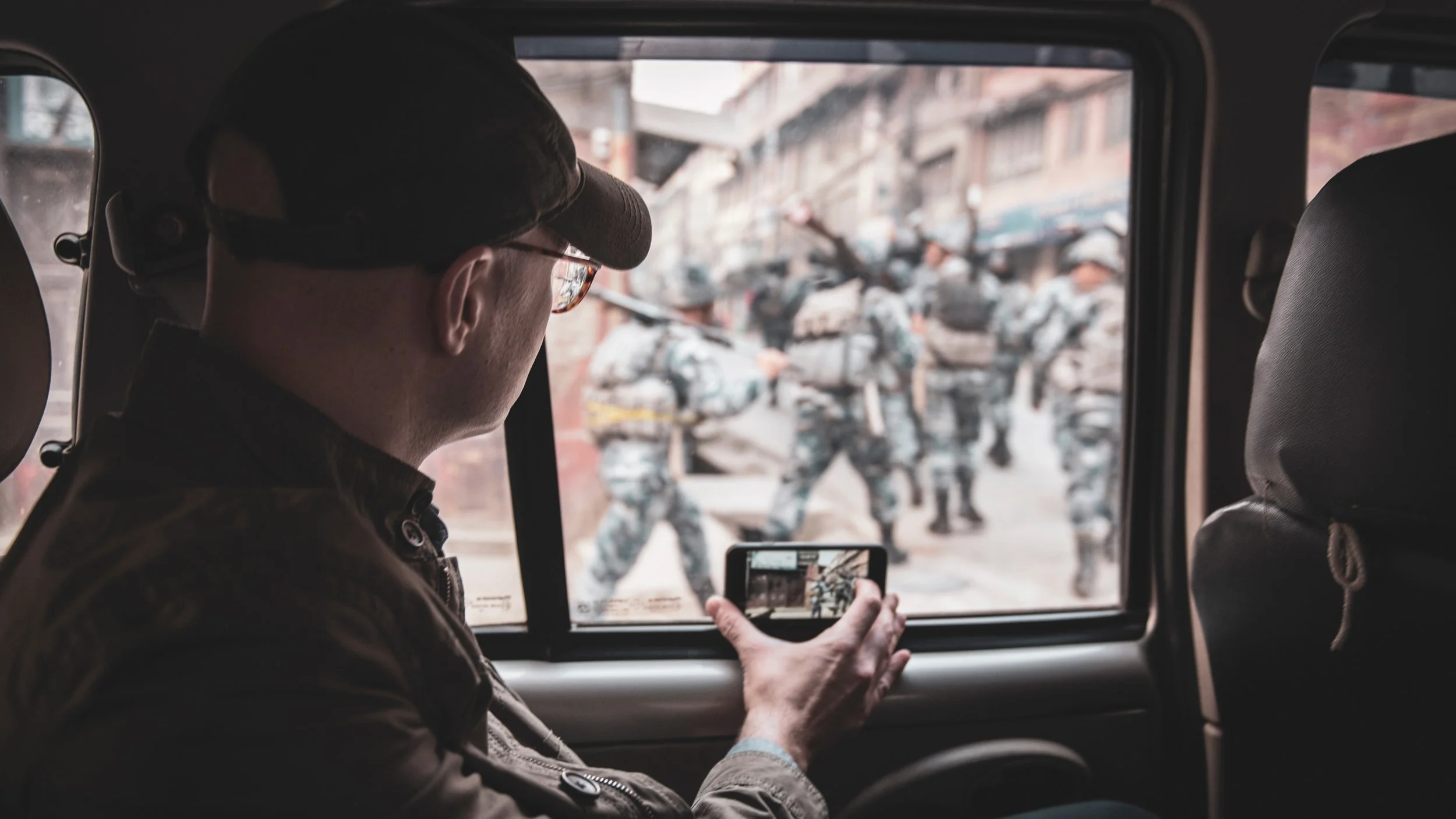

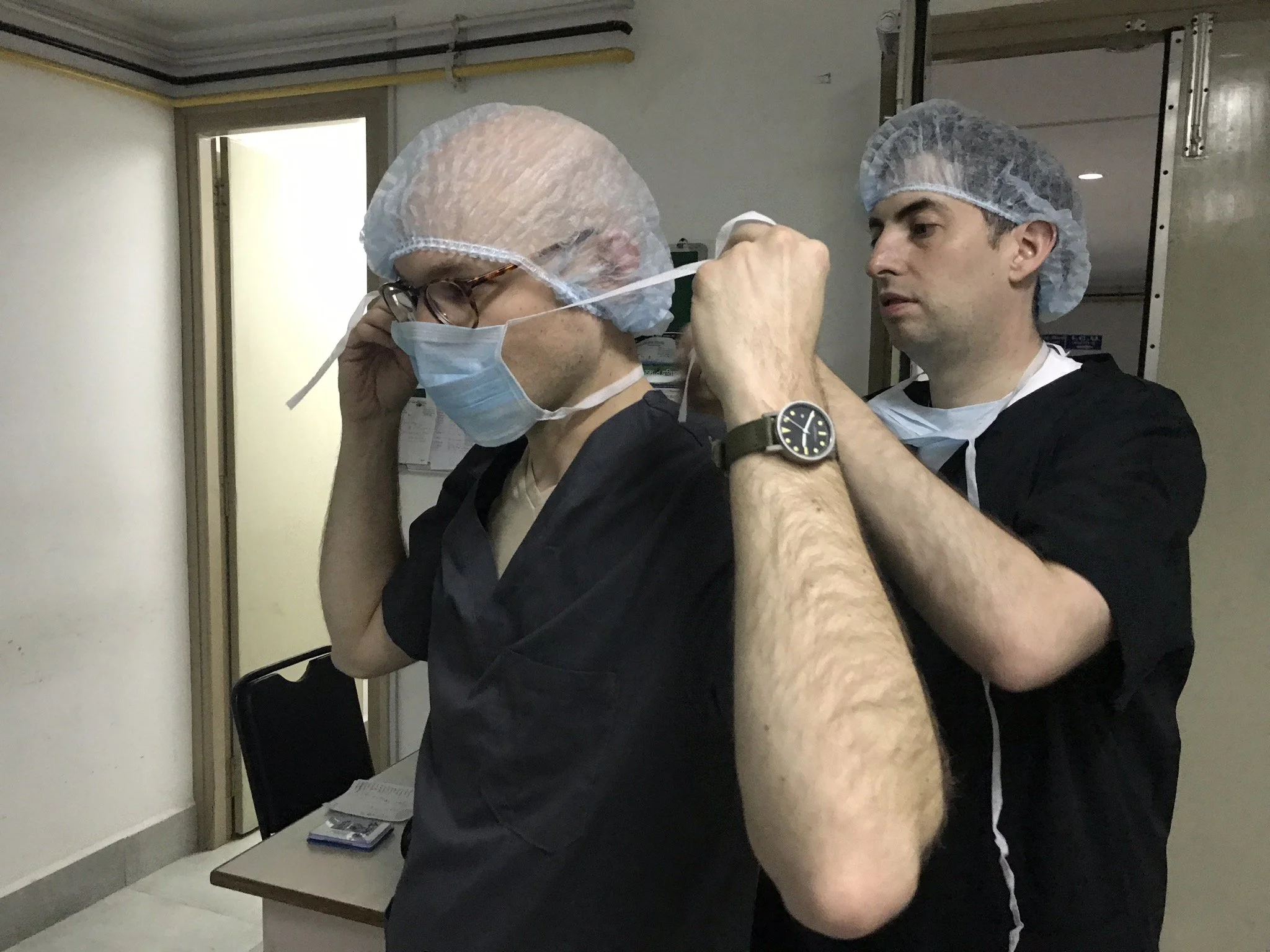
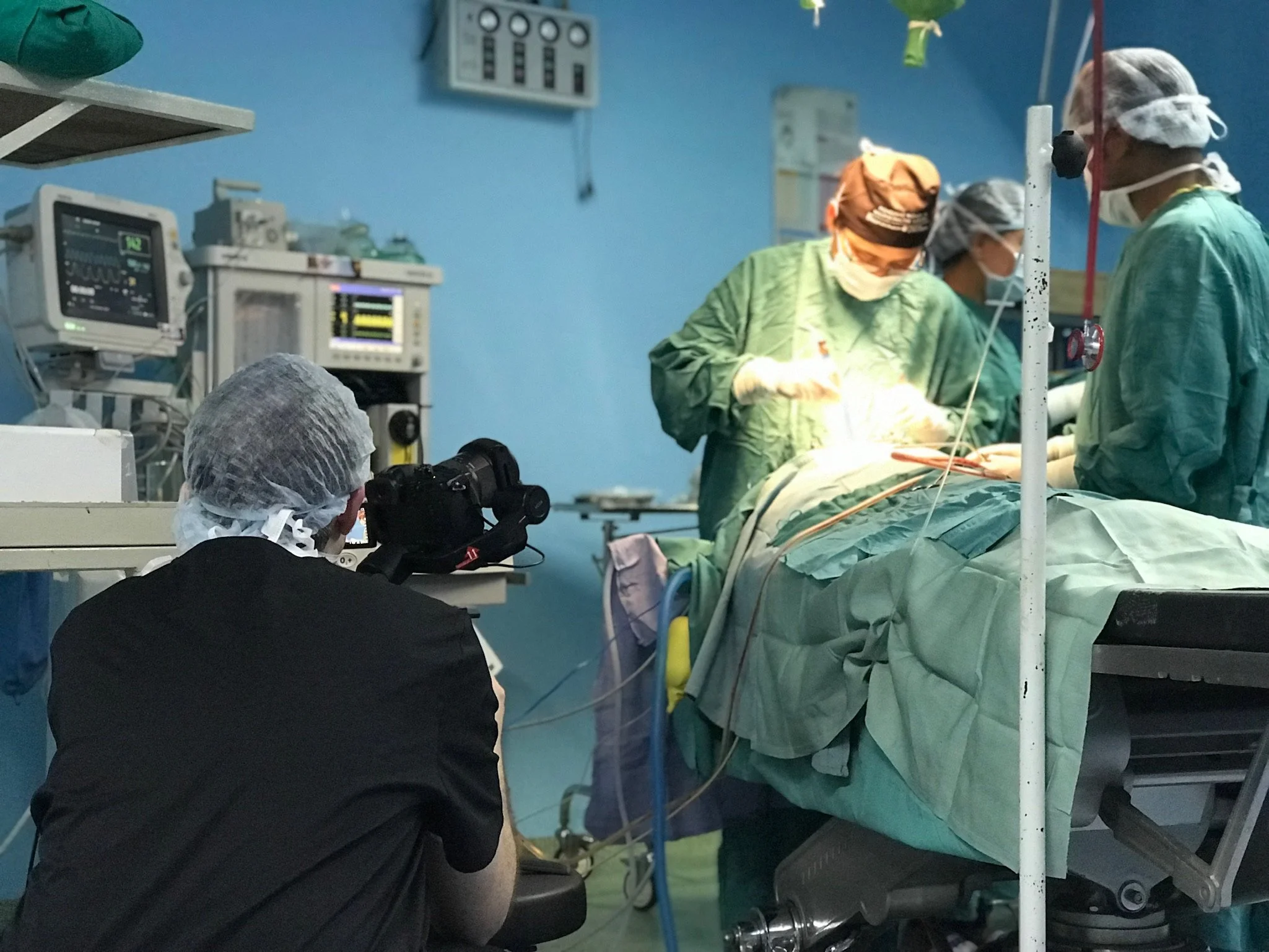
On assignment for ReSurge International and PWRS in Kathmandu with fellow photographers / videographers Brandon O’Larey of Frank Seattle and Andrew Kommers | Photos by one of those dudes
And this is what makes it so special, it just kept going. As awesome as this trip to Nepal was, it came at a time when my life had been completely upended — my relationships, where I lived, and what I did as a professional were all in flux. It was a time of uncertainty, but the watch was there with me, keeping pace.
In retrospect, I admit that the watch really wasn’t intended for such abuse. This is a casual office watch, not a field watch. And that trip took its toll on the timepiece. When I came home, the crown no longer firmly seated itself, changing the date and time felt crunchy, and the mineral glass crystal was foggy and scuffed.
Yet it ticked on, and I loved it.
That trip was a transformative gateway to the deepest friendships, new opportunities and some of the most satisfying creative work I’ve ever done. My journey is encoded in every scratch and scuff on my beat-up V03m.
At the Pashupatinath Temple cremation complex, Kathmandu Nepal | Photo by Andrew Kommers.
Breathing New Life Into the Void
Watch repair is a rarity these days. I’m fortunate to live close to The Millbrook Watch Shop (aka Jwatch), a fantastic shop that was formerly based in Brooklyn, but relocated to the Hudson Valley during the pandemic. They were just 20 minutes away.
I came to find out the Miyota movement isn’t designed to be serviced (as previously stated, it’s a mass market movement that’s cheaper/easier to replace than repair), yet they were able to get the crown to seat firmly and they smoothed out the functions. More importantly, I had them replace the mineral glass crystal with a sapphire crystal. The watch face now glows with new life, no longer hazy with scuffed glass. And the sapphire crystal should be impervious to any abuse I throw at this thing in the future — not that I plan on putting it through the ringer anymore.
My well-worn V03m next to Seiko’s SPB317. The Seiko is a better watch in pretty much every category, but I still prefer the restrained design of the Void.
In the years since repairing this watch, my understanding of the horological world has increased substantially. I’ve invested in other timepieces better suited to rugged use, sweaty hikes and shooting photos on dusty third-world streets. I’m no watch snob (I can’t afford to be), but I have a better grasp on the limits of what a watch can and can’t do. So the V03m will no longer be my go-to-travel buddy. When I need a tank of a watch, I’ll opt for my Seiko SPB317 or, heck, a G-Shock.
But the VOID will continue to travel with me through life. And it’ll remain proudly in my office rotation. I wear it often, actually. And every glance at the wrist takes me back to my adventures shooting photos in Nepal, India and beyond. Every reliable tick of the second hand calls to mind a thousand precious memories as my life was finding a new direction, and it makes me smile every time.
I suppose it’s pretty “super” after all.
On assignment at Kurtipur Hospital in Kathmandu, Nepal | Photo by Andrew Kommers